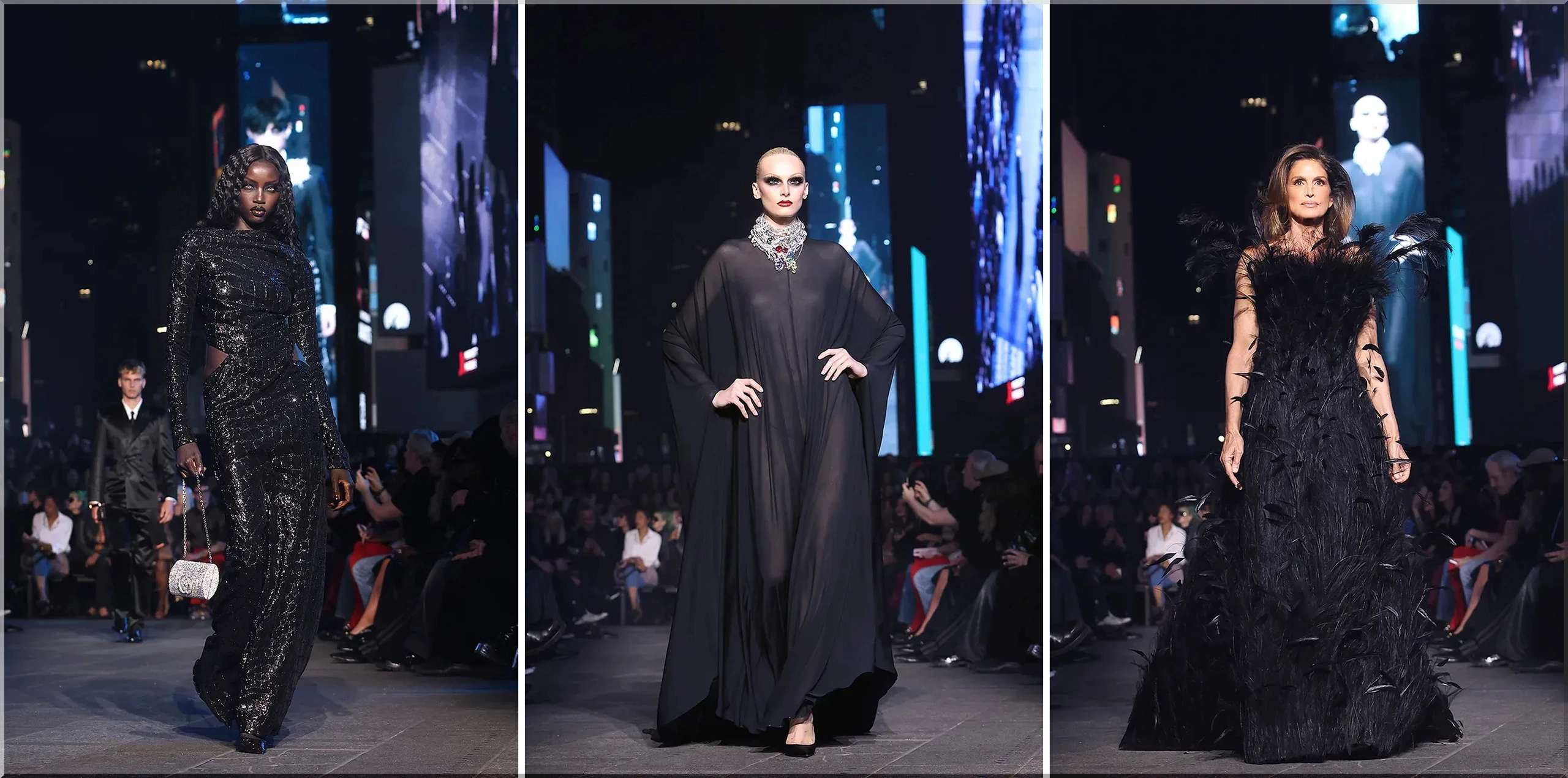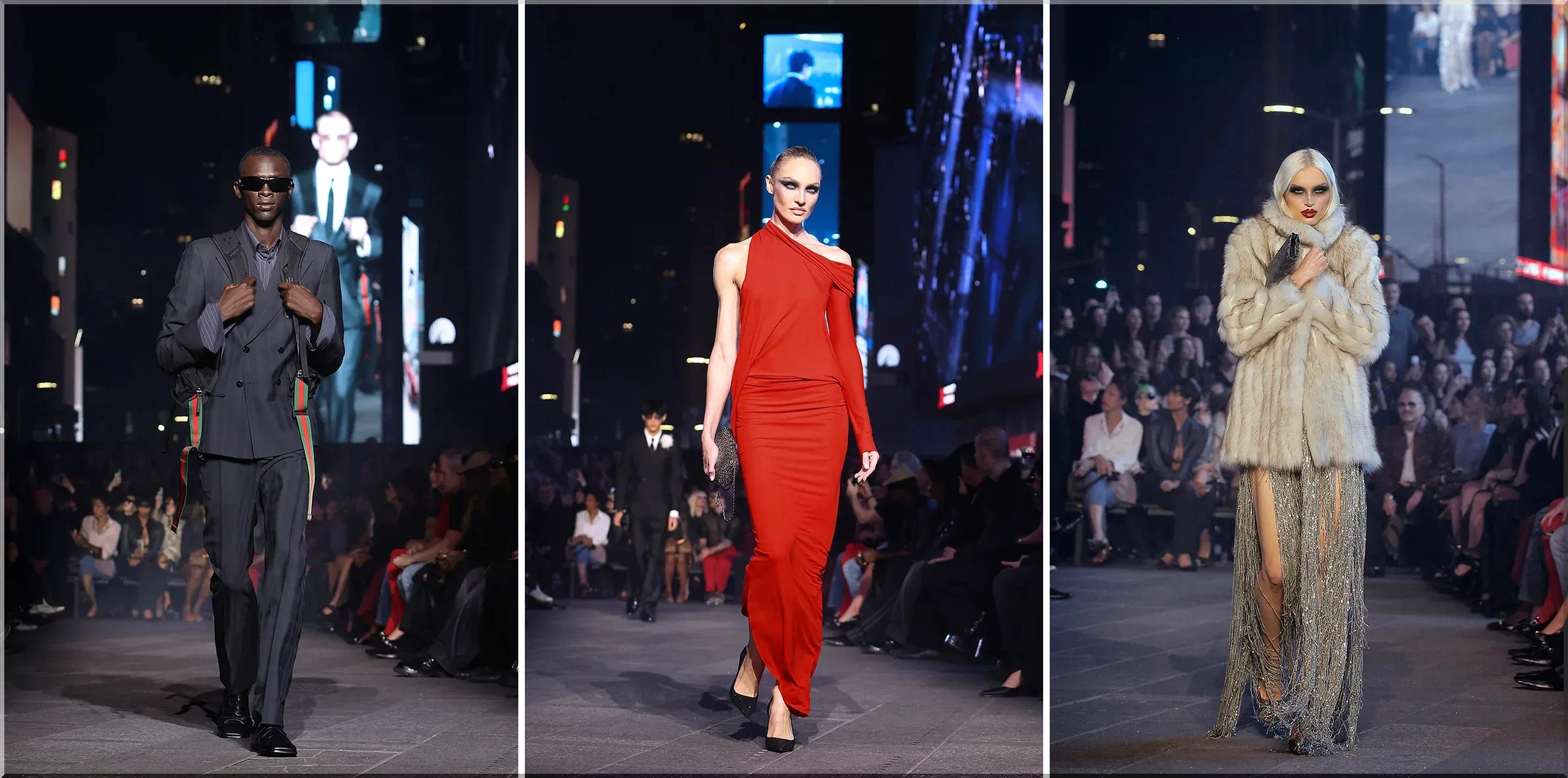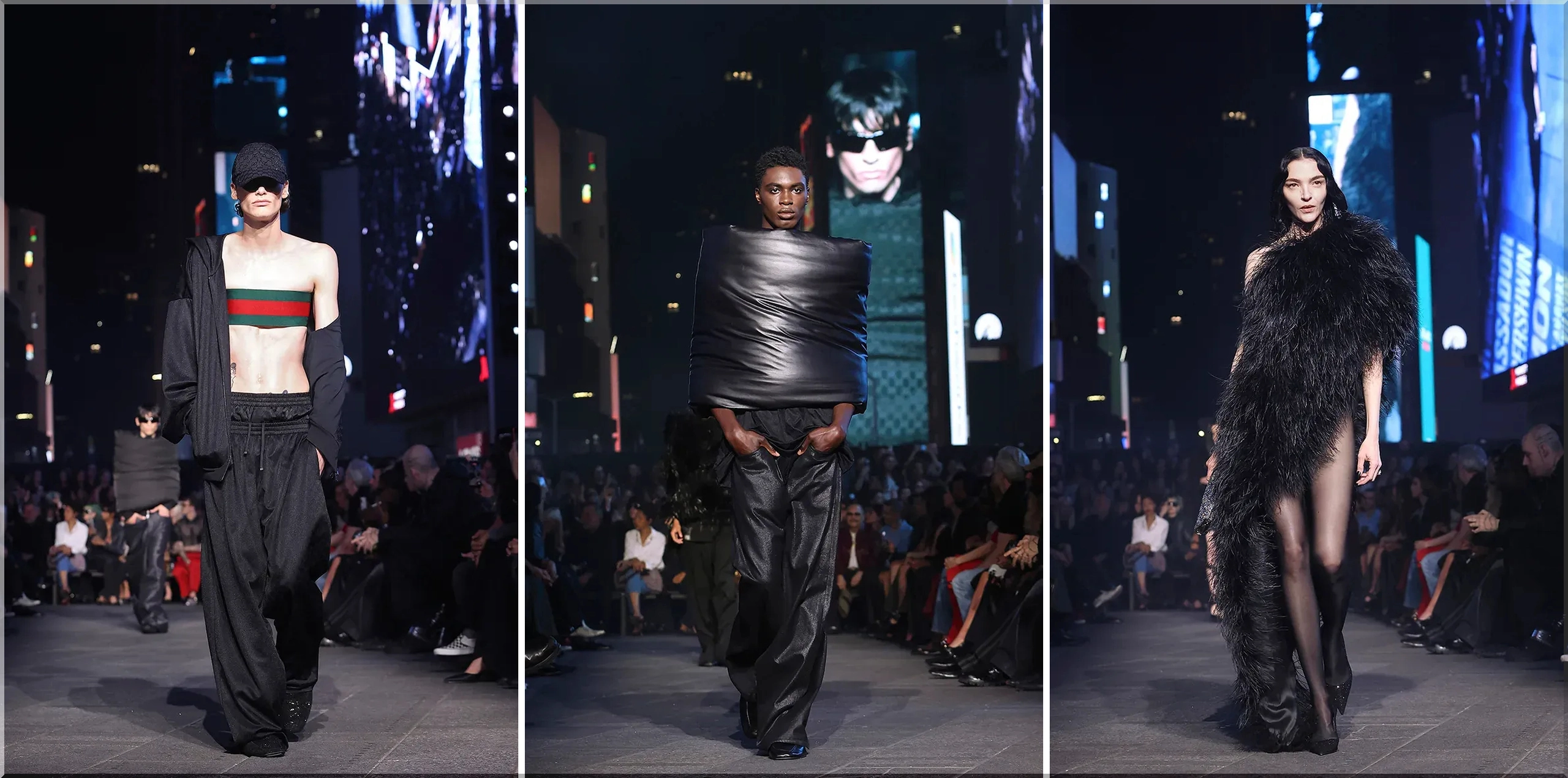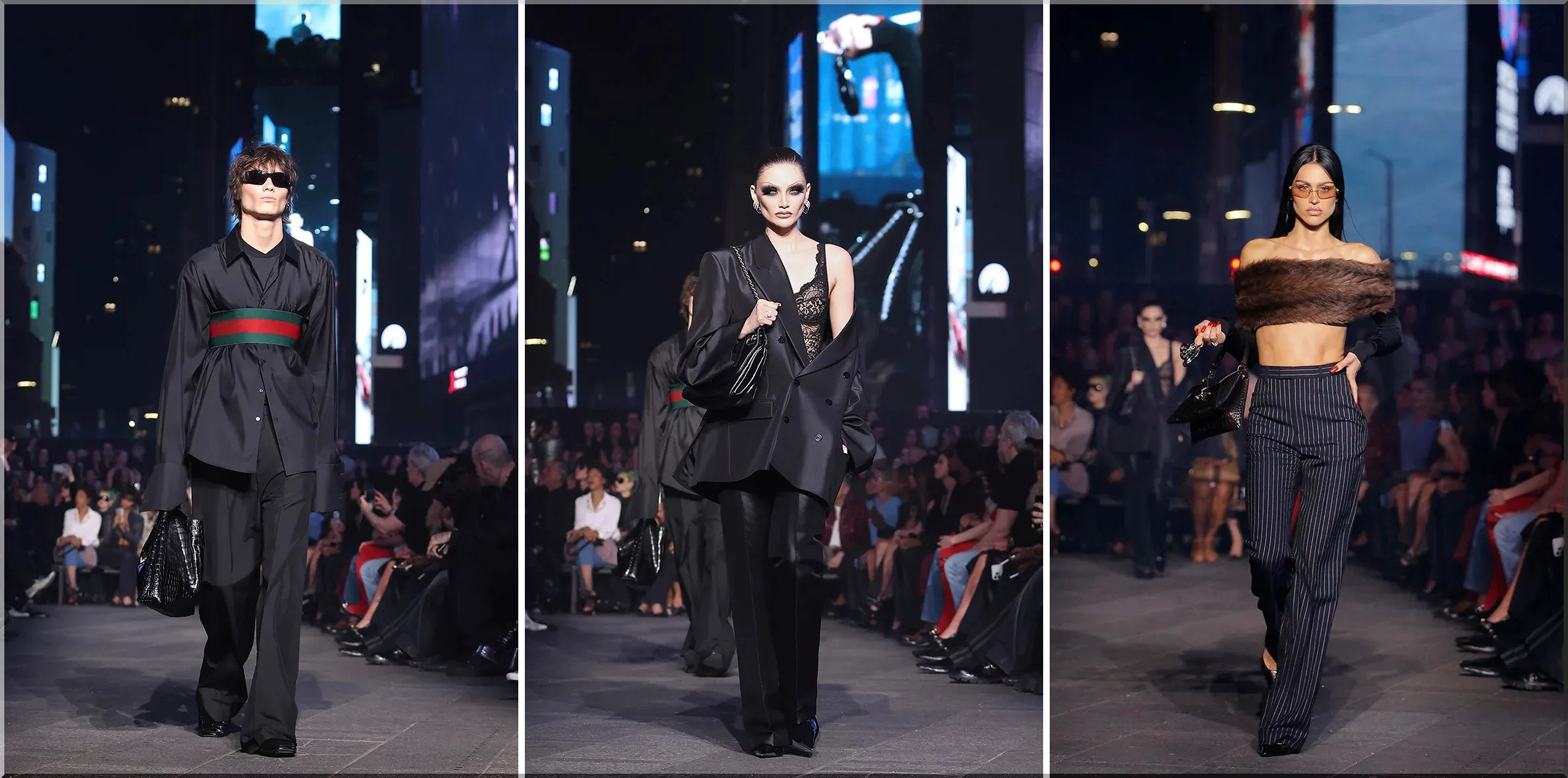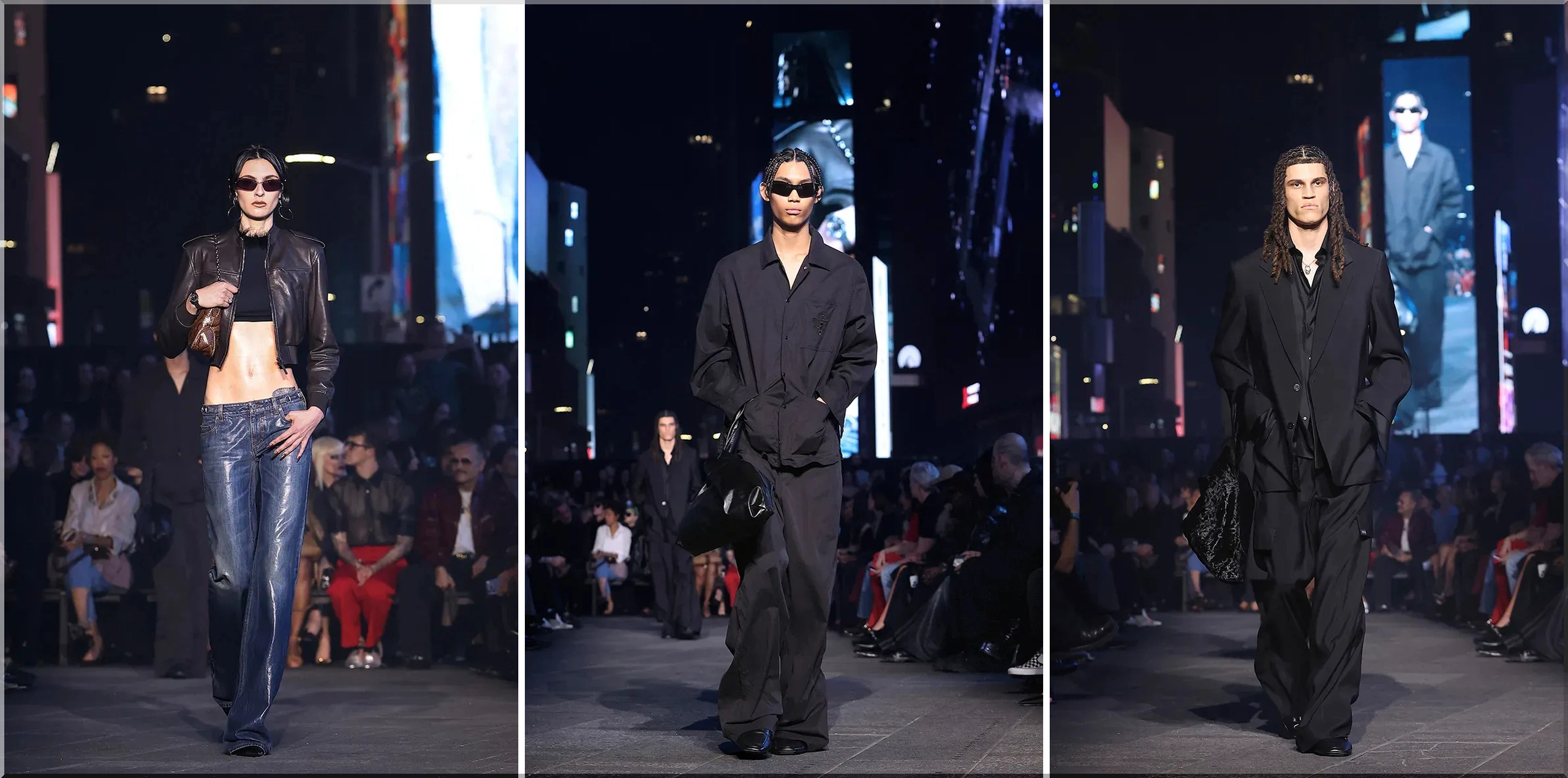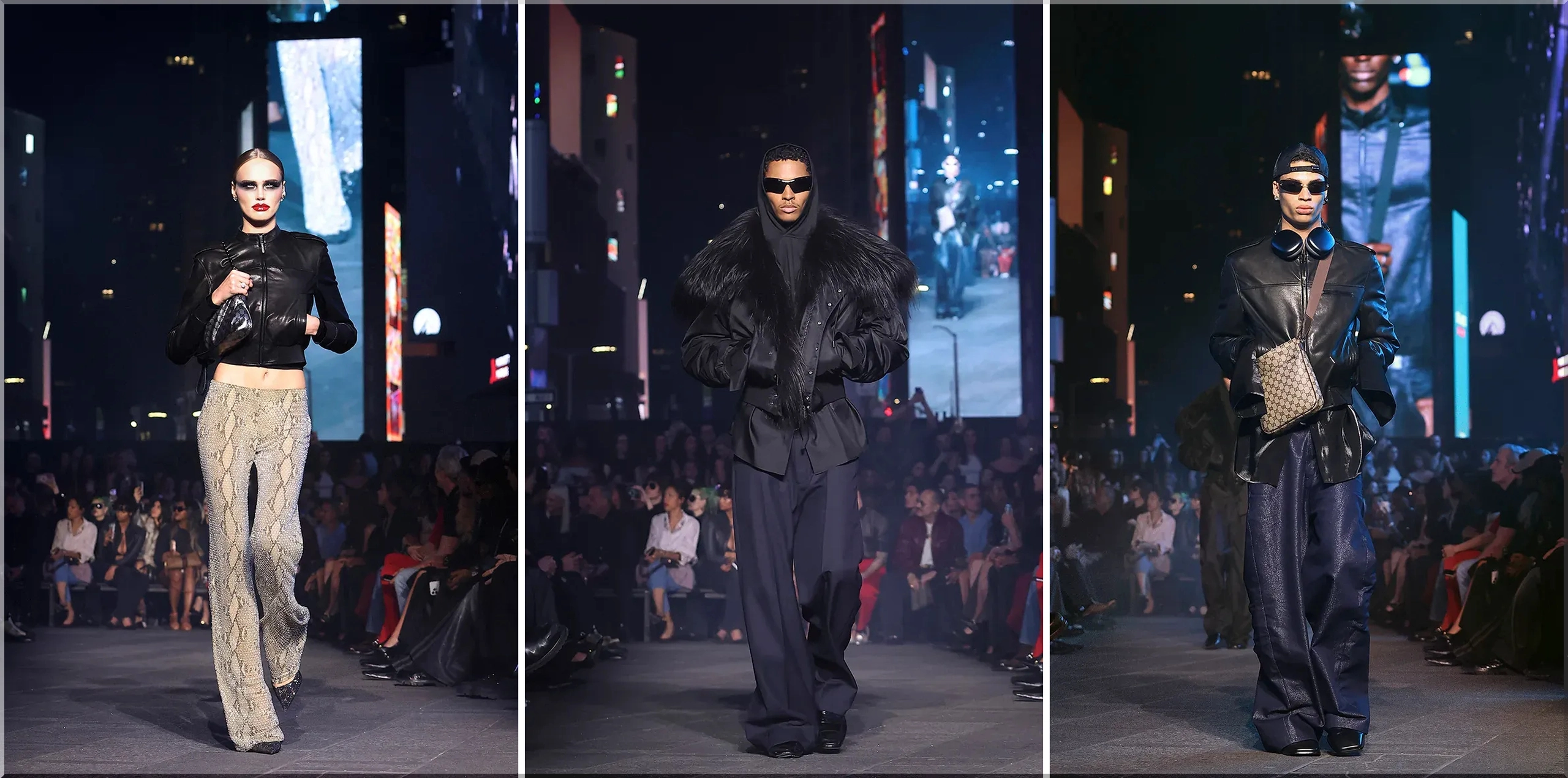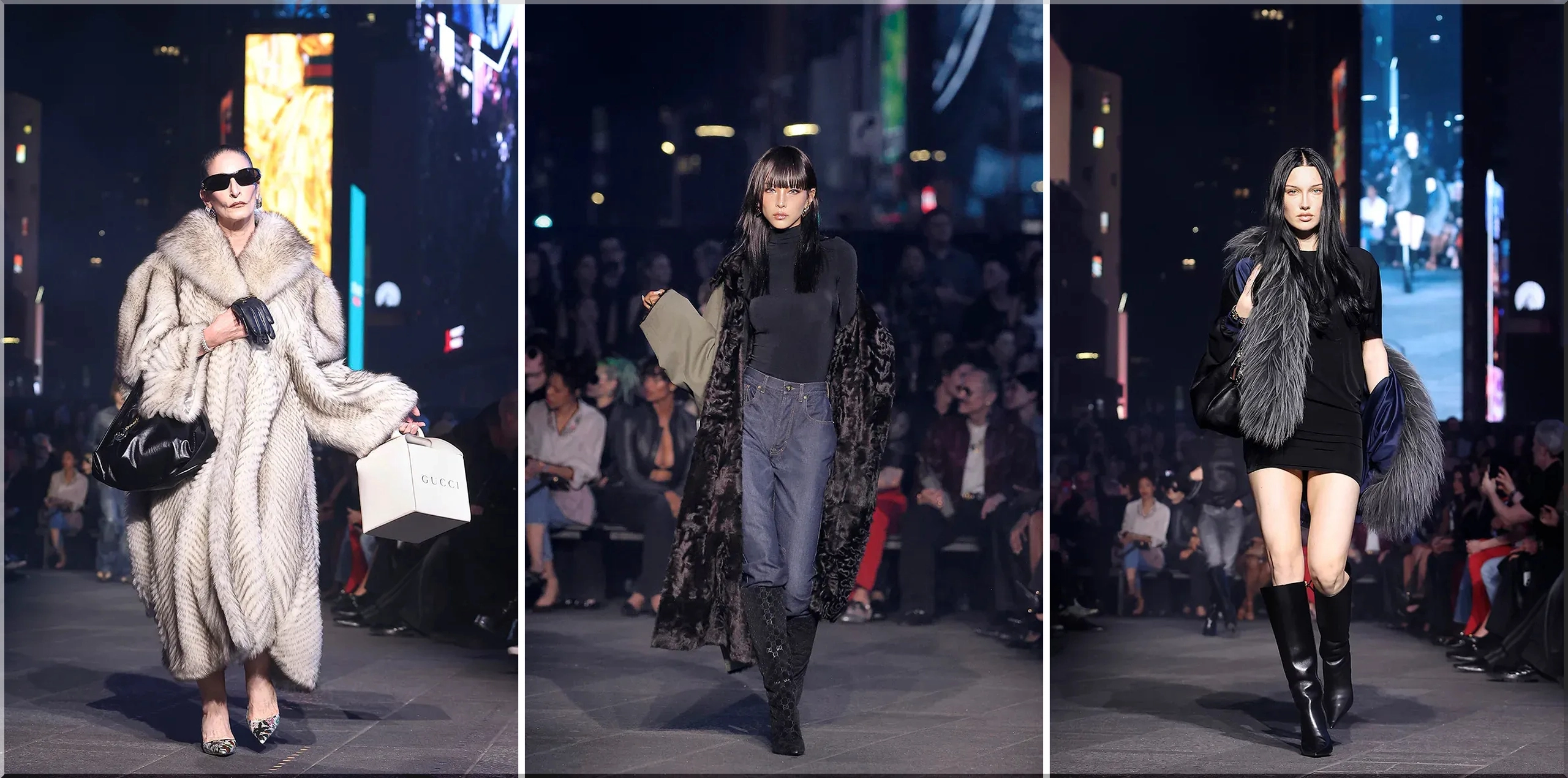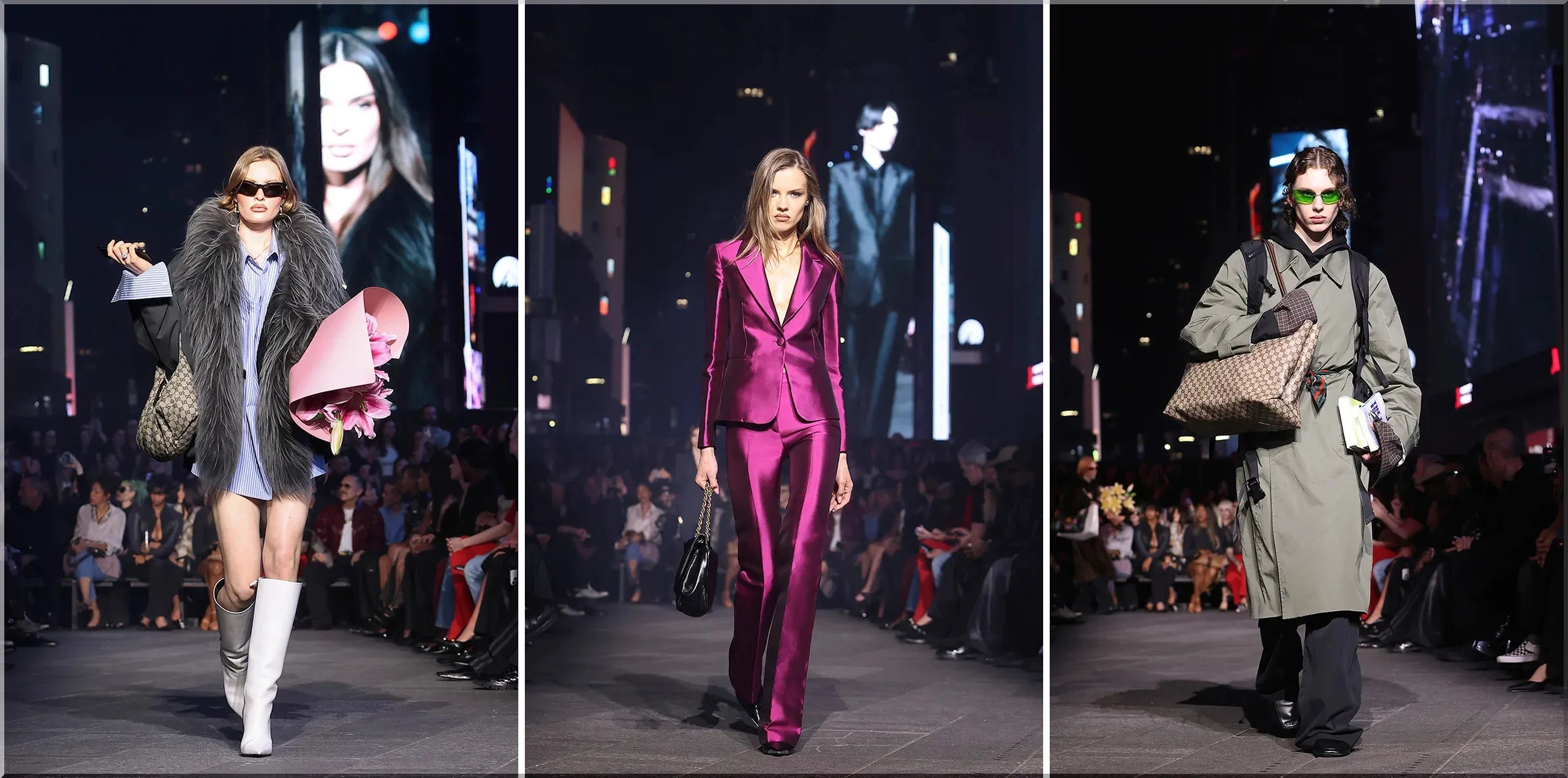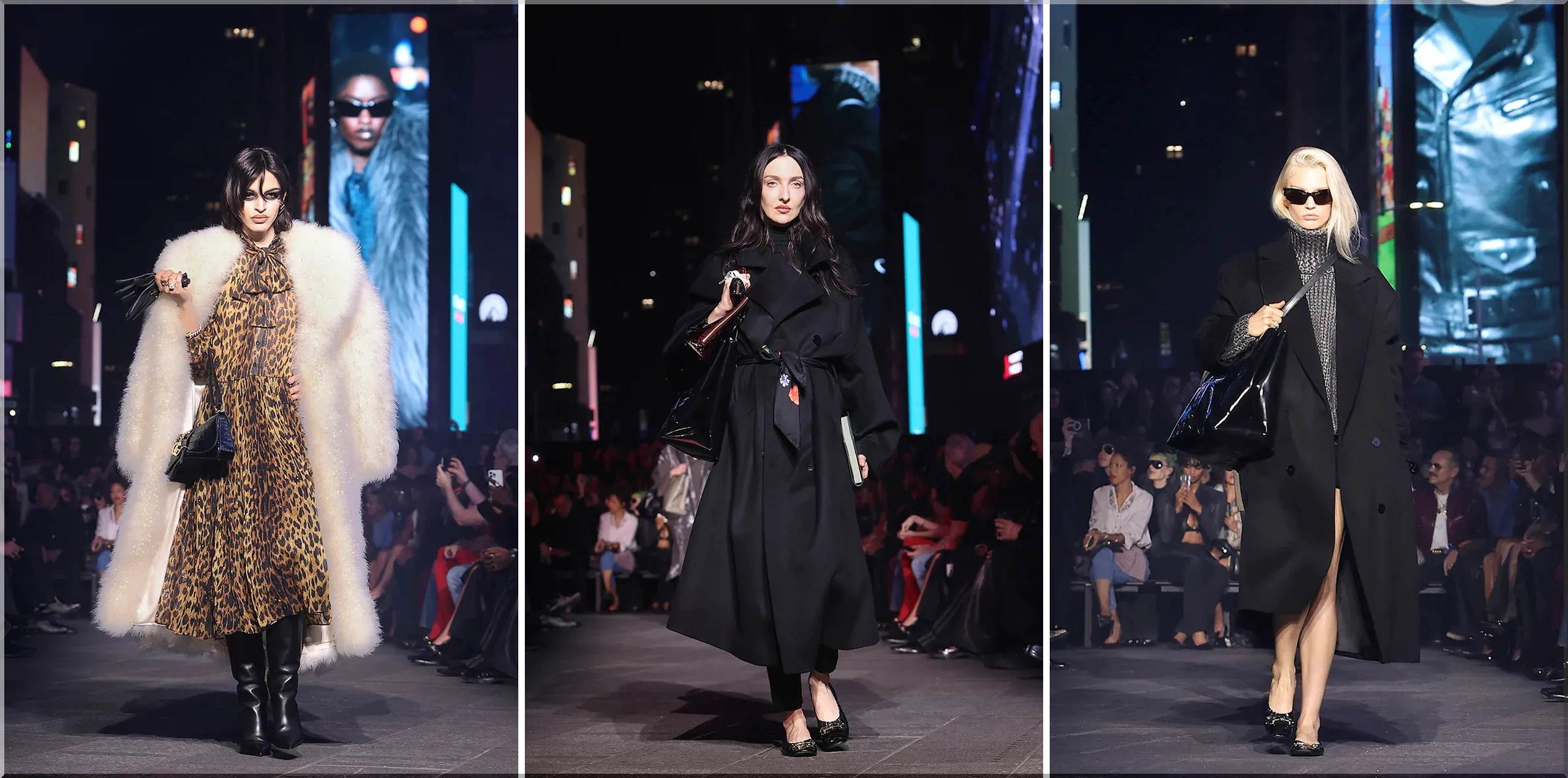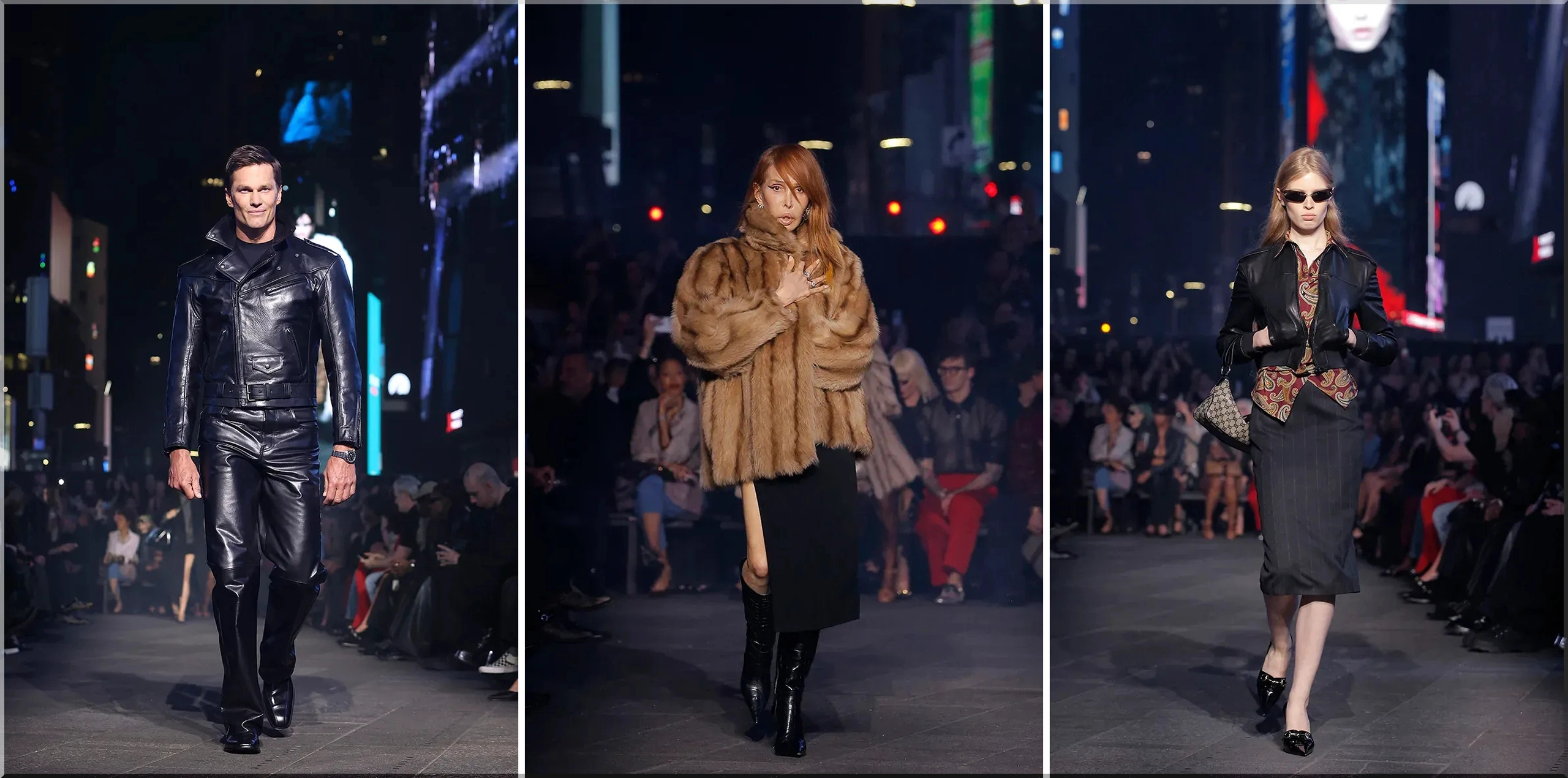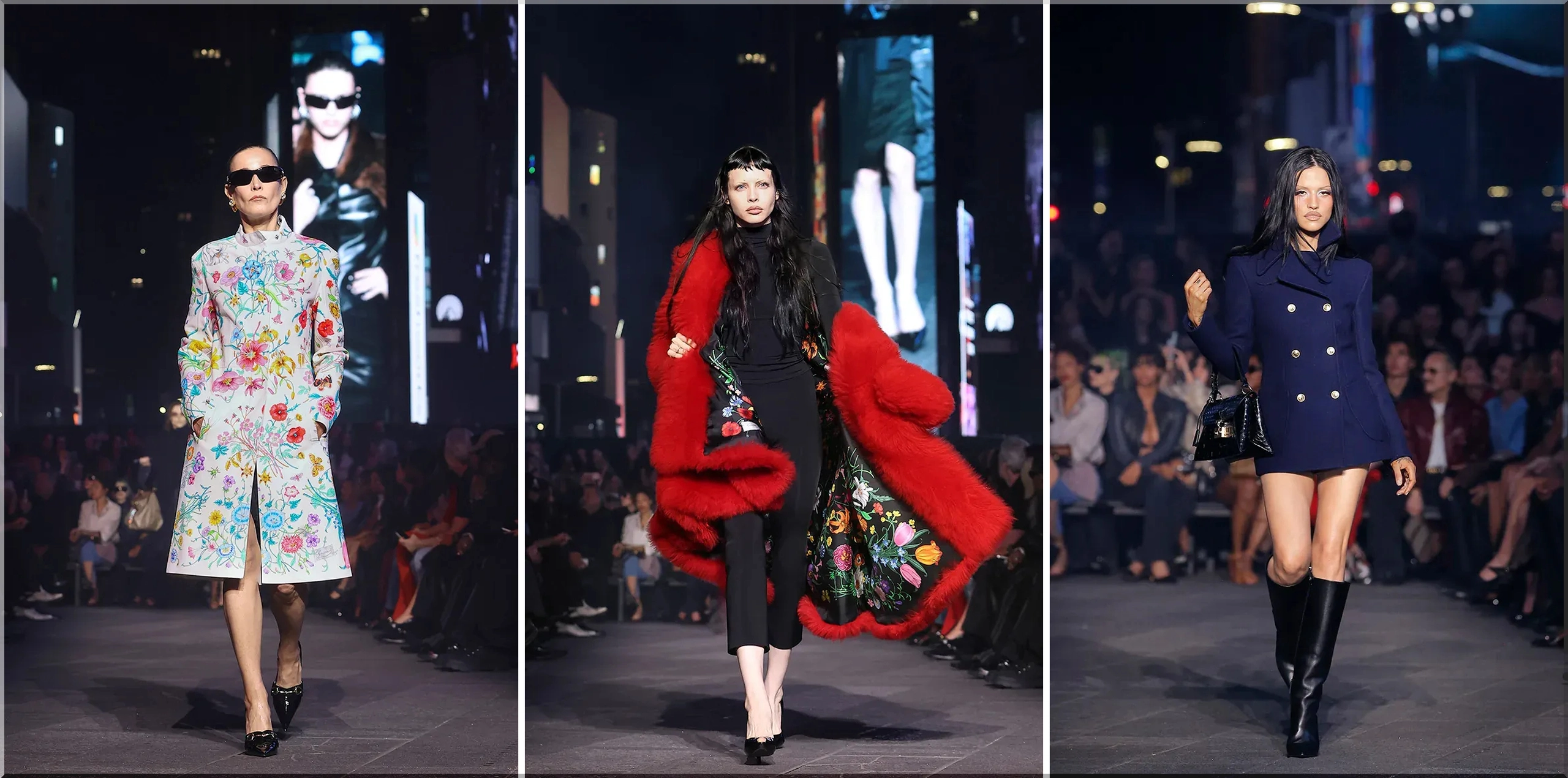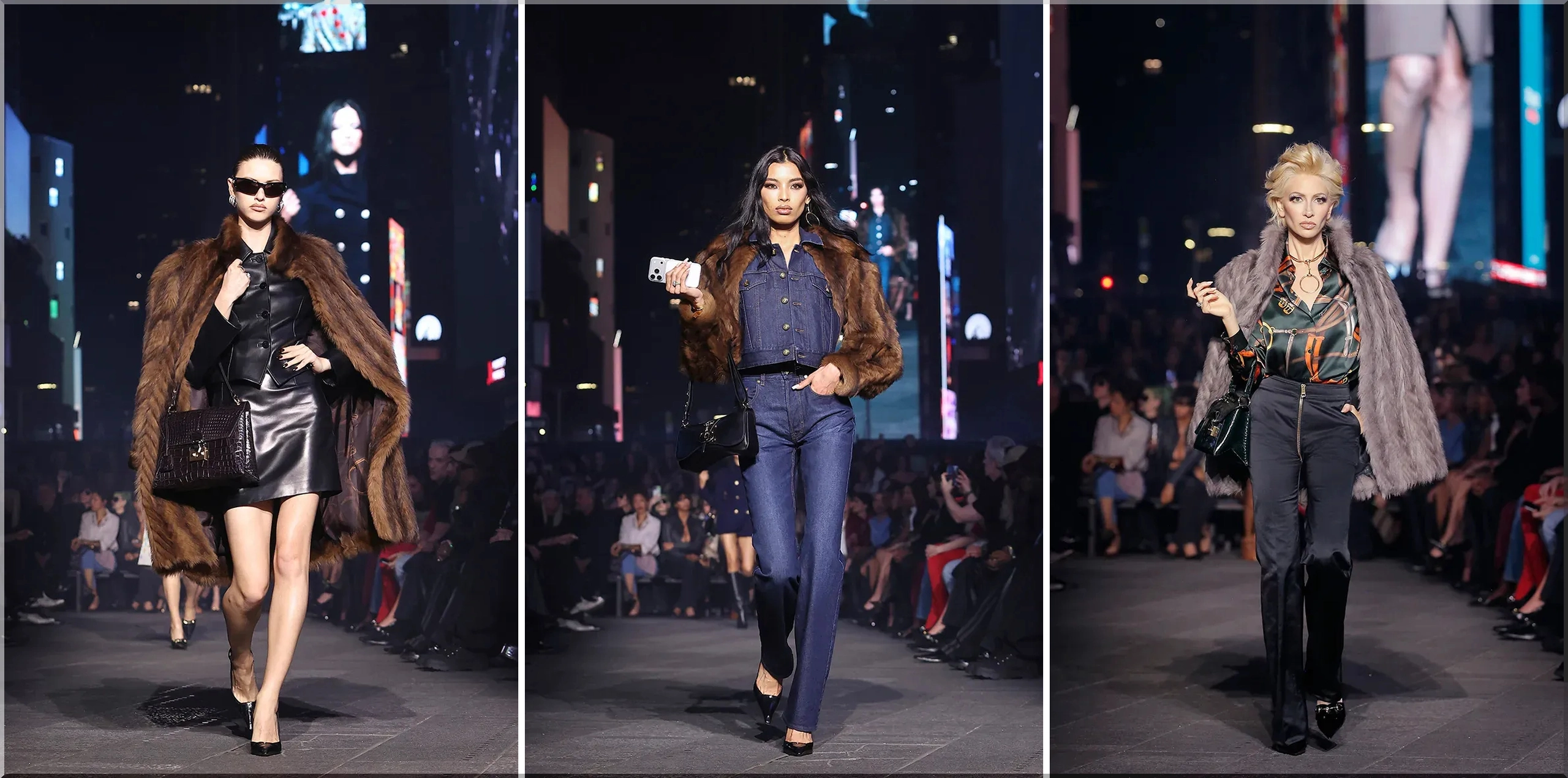

Gucci did something wonderfully risky in New York: it put luxury fashion in the loudest ad space in America and asked everyone to look closer. Gucci Cruise 2027, staged in Times Square under Demna's GucciCore banner, turned a tourist magnet into a runway with sharp suiting, celebrity heat, and a sly question at its center: what does Gucci mean when every screen already wants to sell you something?
GucciCore Begins With a Big New York Statement
The show landed on May 16, 2026, in Times Square, with Gucci using the city's biggest visual stage as part runway, part billboard takeover, and part brand manifesto. Demna did not choose a quiet salon or an old palazzo. He chose midtown noise, camera flashes, LED glare, and the commercial hum that makes Times Square feel like the internet wearing sneakers.
That setting told the story before the first model appeared. Gucci Cruise 2027 was not pitched as a beach-bound resort fantasy. It read as a city wardrobe for people who live in public, move fast, and understand that a coat, bag, belt, or shoe can speak before they do.
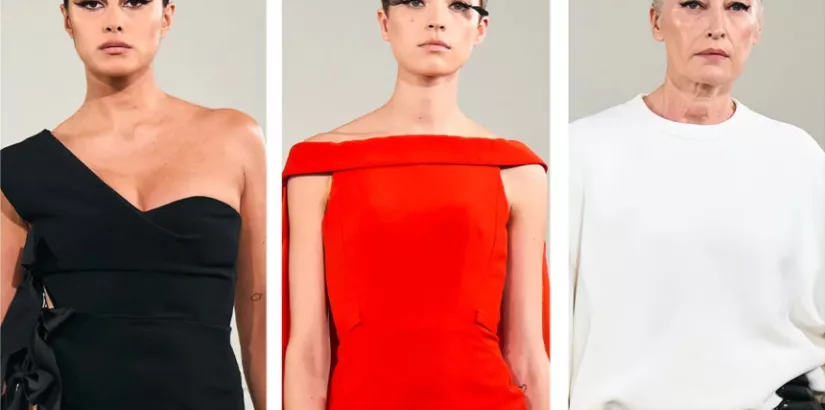
Gucci called the show GucciCore, and the name counts. The collection aimed at a base wardrobe: shirts, pencil skirts, suits, jeans, peacoats, belts, bags, and beauty looks that felt clear but hard to ignore. It put Gucci codes under bright New York pressure.
What GucciCore Means In Plain English
Definition: GucciCore
GucciCore means the most recognizable idea of Gucci, stripped to the pieces and signals people can actually wear. Think sharp suiting, glossy accessories, bold color, heritage motifs, and a knowing sense of showmanship.
Demna has built much of his reputation on staging shows that operate like public events, not quiet product previews. In Times Square, that method made perfect sense. The street already turns branding into theater. Gucci simply rented the loudest room and turned up the volume.
The result felt direct: Gucci wants its Cruise 2027 collection to look like a wardrobe, but also like a media event. The clothes had to work under runway lights. They also had to survive a phone camera, a news clip, a TikTok scroll, and the judgment of anyone who has ever side-eyed Times Square while secretly taking a picture of it.
Gucci Cruise 2027 At A Glance
| Detail | What Happened | Why It Counts |
|---|---|---|
| Show title | GucciCore | Signals a reset around core Gucci pieces |
| Location | Times Square, New York | Puts luxury inside a mass-advertising setting |
| Creative lead | Demna | Marks his first Cruise show for Gucci |
| Collection type | Co-ed Cruise 2027 | Builds a city-ready wardrobe across categories |
| Standout guests | Kim Kardashian, Mariah Carey, Shawn Mendes, Lindsay Lohan, Iman | Adds pop visibility and search demand |
| Runway names | Tom Brady, Paris Hilton, Cindy Crawford | Turns the show into a news event |
Demna's Wardrobe Reset Looks Commercial On Purpose
The smartest part of GucciCore sits in its practicality. Not every look needs a thesis. Some pieces tell customers, 'Yes, this belongs in your closet, and yes, people will notice.'
The collection leaned into items Gucci can sell without lengthy explanation:
- Button-down shirts with a polished, city-ready feel
- Pencil skirts and sharply cut suiting
- Low-rise jeans with a casual, street-level attitude
- Peacoats and wool outerwear with graphic presence
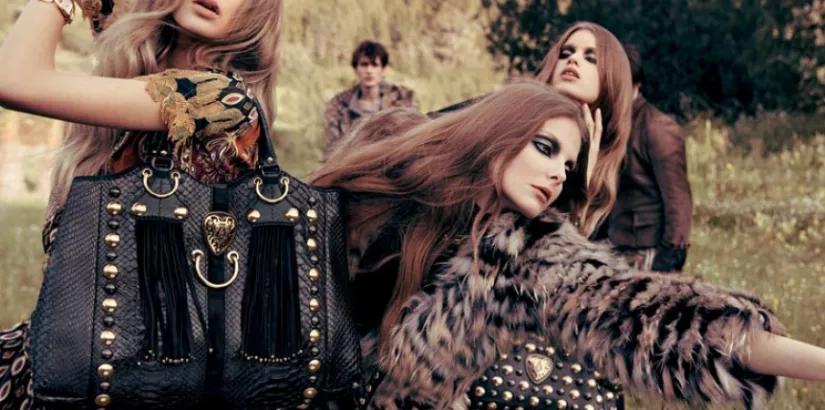
- Horsebit details, belts, totes, heels, and sack-style bags
- Paisley and foulard prints tied to the house archive
- Beauty looks split between daytime shine and after-dark drama
That approach counts for Gucci because luxury buyers have grown choosier. A runway stunt can win attention, but clothes need a reason to exist after the lights shut off. Demna gave Gucci a product-led event, not an event hiding thin product.
Times Square Was The Message, Not The Backdrop
A Times Square show can go wrong in ten different ways before the first heel hits pavement. The location risks swallowing the clothes. It also risks turning luxury into a billboard with better cut.
Gucci leaned into that tension. Reports from the show described screens taken over by Gucci visuals, plus playful ads for real and imaginary Gucci categories. That move gave the event a wink. It suggested the brand knows exactly where it stands: in a retail age where every image sells, every celebrity appearance travels, and every logo needs a reason to live on a screen.
This was smart branding, but not subtle branding. Subtlety would have looked lost here. Gucci picked a place built for maximum exposure and asked Demna to make the excess feel intentional.
Pro-Tip: Why This Works For Search And Social
Fashion moments travel farther when they give audiences three simple hooks: a recognizable place, a recognizable face, and a clear phrase. Gucci Cruise 2027 had all three. Times Square gave it location power. Tom Brady, Paris Hilton, and Cindy Crawford gave it name recognition. GucciCore gave editors, fans, and search engines a clean label.
The Celebrity Casting Did More Than Add Flash
Celebrity presence can feel lazy when a brand uses famous people as decoration. Gucci used them as part of the message.
Tom Brady appeared in black leather, making a runway debut that pulled sports media into a fashion story. Paris Hilton arrived in an amber-yellow dress with a red-and-green Gucci belt and brunette hair, feeding beauty and celebrity coverage at once. Cindy Crawford closed the show in a black strapless feathered gown, giving the finale a classic supermodel charge.
That mix expanded the audience. A fashion-only runway might please insiders. GucciCore pulled in luxury shoppers, celebrity watchers, sports fans, beauty readers, and New York spectators who may never read a runway review but know a viral clip when they see one.
The front-row names helped too. Kim Kardashian, Mariah Carey, Shawn Mendes, Lindsay Lohan, Iman, Stormzy, Alix Earle, and Ivy Getty turned the event into a search magnet. Gucci did not ask the internet to care. It handed the internet a full tray.